

Ethanol. Reengineered.
Ethanol. Reengineered.
Overview
Ethanol without agriculture
AIRMADE® Ethanol replaces centuries-old agricultural fermentation with a precision catalytic pathway that converts carbon dioxide directly into high-purity ethanol.
By eliminating crops and biological variability, it delivers consistent quality at industrial scale. Supply is no longer tied to harvest cycles, geography, or feedstock constraints.
For global brand leaders, ethanol quality is no longer a variable. It becomes a controlled input.

Process
Engineered for consistency. Built for lower carbon.
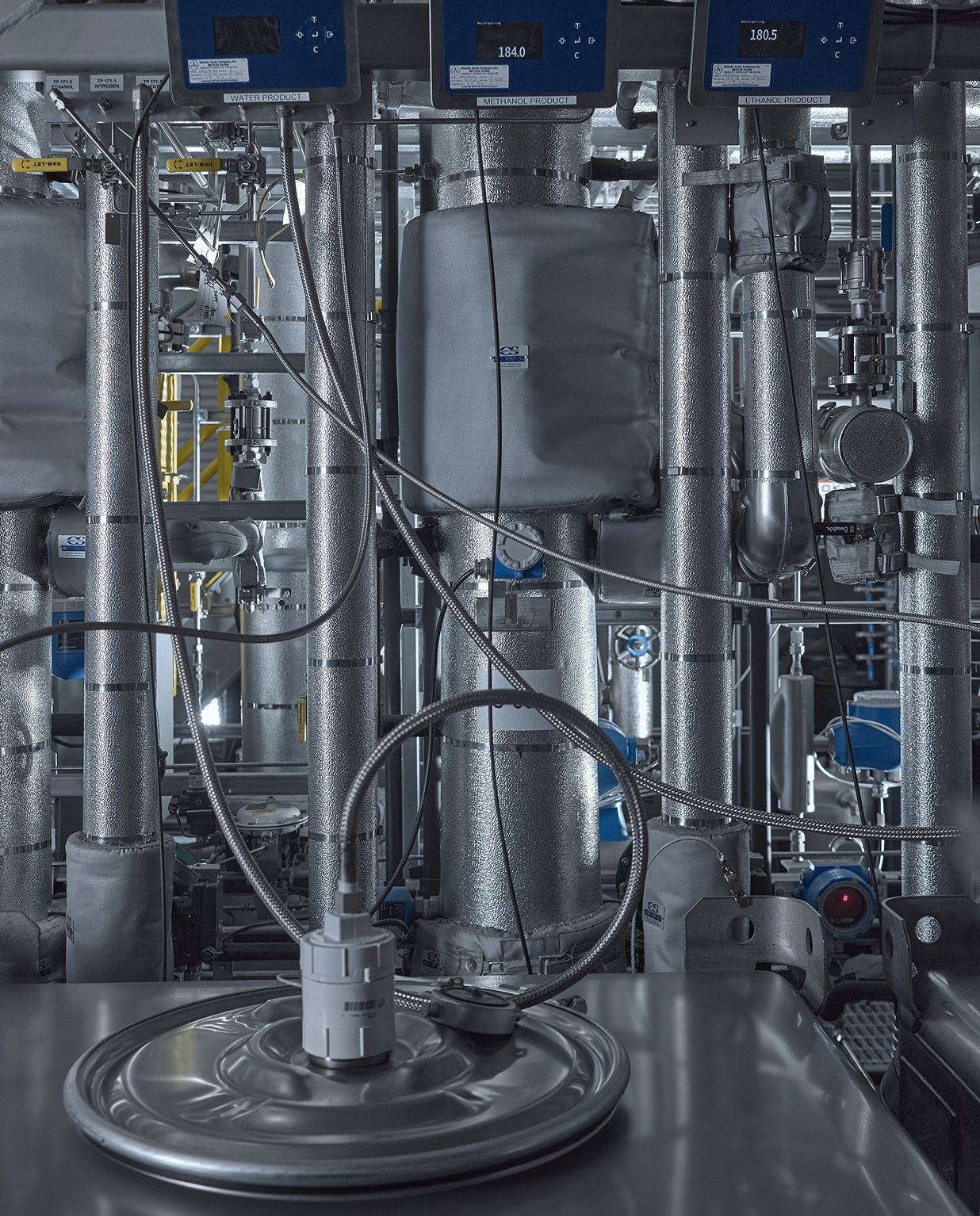
AIRMADE® Ethanol is produced through a controlled catalytic process that builds ethanol directly from carbon dioxide and hydrogen.
Eliminating fermentation allows tighter control over reaction conditions, composition, and output at scale, enabling molecular-level consistency across batches, markets, and years.

A process comparison highlights differences in purity, yield, and consistency relative to conventional fermentation.
Agricultural fermentation
AIRMADE® Ethanol
Production method
Biological conversion of sugars
Catalytic conversion of CO₂ and hydrogen
Primary inputs
Crops (corn, sugarcane, biomass)
Carbon dioxide and hydrogen
Process control
Limited; subject to biological variability
Tight, repeatable control over chemistry
Product consistency
Variable by feedstock, season, and location
Stable, well-defined ethanol profile
Impurities
Trace byproducts from biological processes
Minimal impurities from non-biological conversion
Carbon efficiency
Lower; carbon lost through biomass pathways
>90% carbon retained into finished ethanol
Land & water use
High; dependent on agriculture
Minimal; no crops or arable land required
Scalability
Constrained by land, water, and geography
Scales independent of agriculture
Production method
Agricultural fermentation: Biological conversion of sugars
AIRMADE® Ethanol: Catalytic conversion of CO₂ and hydrogen
Primary inputs
Agricultural fermentation: Crops (corn, sugarcane, biomass)
AIRMADE® Ethanol: Carbon dioxide and hydrogen
Process control
Agricultural fermentation: Limited; subject to biological variability
AIRMADE® Ethanol: Tight, repeatable control over chemistry
Product consistency
Agricultural fermentation: Variable by feedstock, season, and location
AIRMADE® Ethanol: Stable, well-defined ethanol profile
Impurities
Agricultural fermentation: Trace byproducts from biological processes
AIRMADE® Ethanol: Minimal impurities from non-biological conversion
Carbon efficiency
Agricultural fermentation: Lower; carbon lost through biomass pathways
AIRMADE® Ethanol: >90% carbon retained into finished ethanol
Land & water use
Agricultural fermentation: High; dependent on agriculture
AIRMADE® Ethanol: Minimal; no crops or arable land required
Scalability
Agricultural fermentation: Constrained by land, water, and geography
AIRMADE® Ethanol: Scales independent of agriculture
Engineered from CO₂. Not crops.
Applications
Built for brands that define the market.
AIRMADE® Ethanol is engineered for brands and manufacturers where ingredient quality directly impacts product performance, consumer perception, and pricing power.
By delivering consistent, high-purity ethanol independent of agricultural variability, it enables differentiated products built on repeatable performance at scale.


Impact
Low-carbon performance without compromise
By replacing fermentation with a catalytic pathway, AIRMADE® Ethanol reduces carbon intensity while maintaining premium quality and scalability.
This allows partners to embed measurable low-carbon performance directly into their products, strengthening brand positioning and supporting long-term regulatory resilience without sacrificing economics.
Up to ~98% lower carbon intensity
Minimal water consumption
No reliance on crops or arable land
Fully compatible with premium and performance-driven applications
Progress